
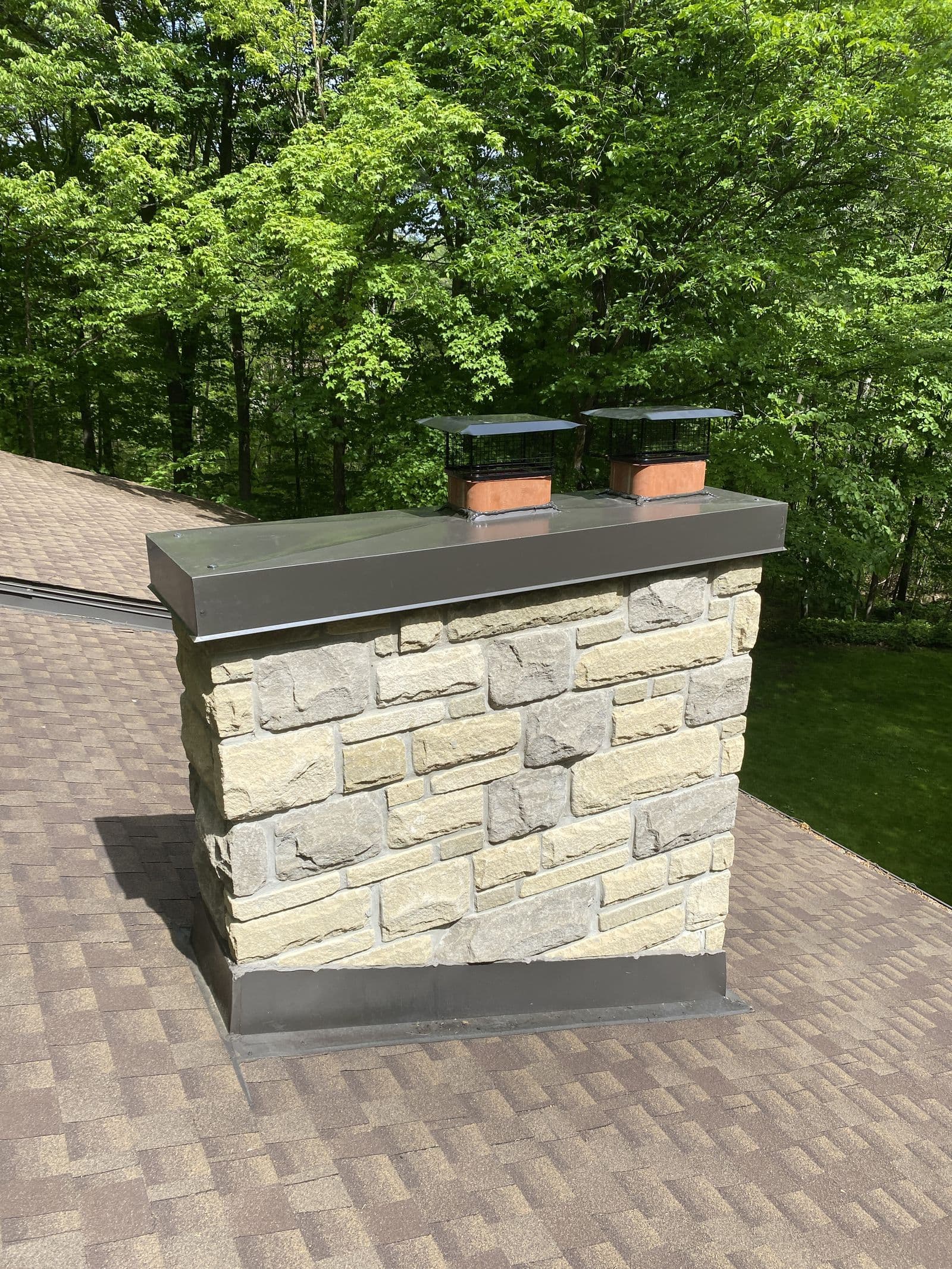
Benefits of a Chimney Cap
A chimney cap is installed at the very top of the chimney, and it serves several important purposes. The number one benefit provided by a chimney cap is that it prevents water from getting into the chimney. If there is no chimney cap, the rain pours in and can cause damage to your attic and interior ceilings and walls. Moisture buildup can produce odors and mold.
If a chimney cap has mesh siding, it can prevent critters from getting into your chimney and causing a variety of problems and inconveniences. Animals that often gain access to chimneys include squirrels and raccoons. Birds are also drawn to chimneys because of the warmth they provide, and they will build nests there if the chimney isn't capped. When an animal gets stuck inside a chimney, as often the sides of the flue are too smooth to climb out, it will often die there, which creates a horrible stench.
The wire mesh on chimney caps serves a dual purpose. The mesh also operates as a spark deflector, preventing rooftops and other nearby combustibles from catching fire as a result of a hot ember that escapes through the chimney.
It is not uncommon for winds on a rooftop to create a downdraft, which causes smoke to back up into a home. A chimney cap can stop the frustrating effects of downdrafts, which also means cold blasts of air are prevented from creating a chilling effect in your home.
Chimney cap mesh & obstruction
Chimney cap mesh sometimes has very small openings that are easily clogged with creosote. Anytime firewood is burned, some creosote is deposited in the flue lining, and it can also become attached to the mesh of the chimney cap. The oxygen needed for the fire can be cut off as a result of an obstructed chimney cap. This can result in difficulty lighting a fire and in inefficient fires that don't produce much warmth. Any type of chimney obstruction can also expose the household to toxic fumes, including deadly carbon monoxide.
Black fine powder called soot can also obstruct the chimney cap. If the fuel is clean-burning, less soot and creosote will be deposited. But if green or moist wood is burned, there is a greater likelihood of having a chimney cap that is obstructed by soot.
It is recommended that paper not be burned in a fireplace, and one reason is that ash can easily become trapped in the chimney cap netting, creating blockage. High winds can cause leaves and other types of debris to clog chimney caps. In heavy winter storms, snow and ice can block the chimney cap mesh. If creosote and soot accumulates in the chimney cap mesh, the chimney and roof as well as the surrounding stucco or brick can become discolored.
All of the potential problems associated with chimney caps are easily addressed with routine maintenance, and the pros far outweigh the cons. Annual chimney inspections include attention to chimney caps and removing any obstructions. Even if you rarely use your fireplace, there is the possibility of chimney cap obstruction that should routinely be addressed.